Quick answer: the best faceless YouTube channel ideas are niches where the subject can carry the video on its own: history, space and science, personal finance, mysteries and true stories, product comparisons, tech explainers, top-ten lists, geography, faceless gaming, animal facts, narrated stories and ambient sound. Each one needs a thumbnail that sells the click without a face, so the subject takes the face's job. A ruin at the moment it falls, a planet next to something huge, one object that stands for the money, a door left open in the dark. Keep two to four words on the image, one subject in focus, and the bottom-right corner clear for YouTube's duration badge. Pick a niche where you can make fifty different videos, not fifty copies of one: YouTube's monetization rules refuse channels whose videos look mass-produced. Below, each idea comes with what the video is made of, what its thumbnail shows and the trap to avoid.
Every example image below was made with ThumbnailMaker's AI thumbnail maker, which writes the brief from your video's link: 3 free thumbnails with no card, then a plan from $12 a month.
What makes a faceless channel idea work?
A faceless channel replaces the presenter with something else the viewer wants to look at. Three tests decide whether an idea survives past the tenth video:
- The subject shows itself. A ruin, a planet, a coin jar or a map can fill a frame. "Productivity tips" can't, which is why so many productivity channels end up with a stock photo of a laptop.
- It repeats as a format, not as a video. Fifty episodes of "why X collapsed" work; fifty identical slideshows don't. YouTube's inauthentic content policy refuses to monetize "image slideshows, templated storylines, or scrolling text with minimal or no narrative, commentary, or educational value".
- The thumbnail has a focal point without a face. On a channel with a presenter, the expression does the emotional work. Here, scale, contrast, light or a single odd detail has to do it.
The general thumbnail formats, with faces, are in our 12 YouTube thumbnail ideas. This guide is about the channels where the face is not an option.
Which faceless niches tell a story?
1. History explainers
Narration over maps, paintings, ruins and reconstructions: the fall of an empire, a forgotten war, a lost city. The script is the product, and history viewers stay for a long video if the question is good. The thumbnail shows the place at the moment of its story, not a portrait of a ruler.
- The thumbnail: the ruin with one arch fallen into rubble, golden light and dust, and the question in serif capitals: "WHY ROME FELL".
- The trap: a famous face from a painting on every thumbnail. Ten portraits in a row read as one video.
2. Space and science
Explainers on black holes, the end of the Sun, the deep ocean or how a virus works, built on renders and animation. The hook is scale, so the thumbnail shows two things of very different sizes side by side.
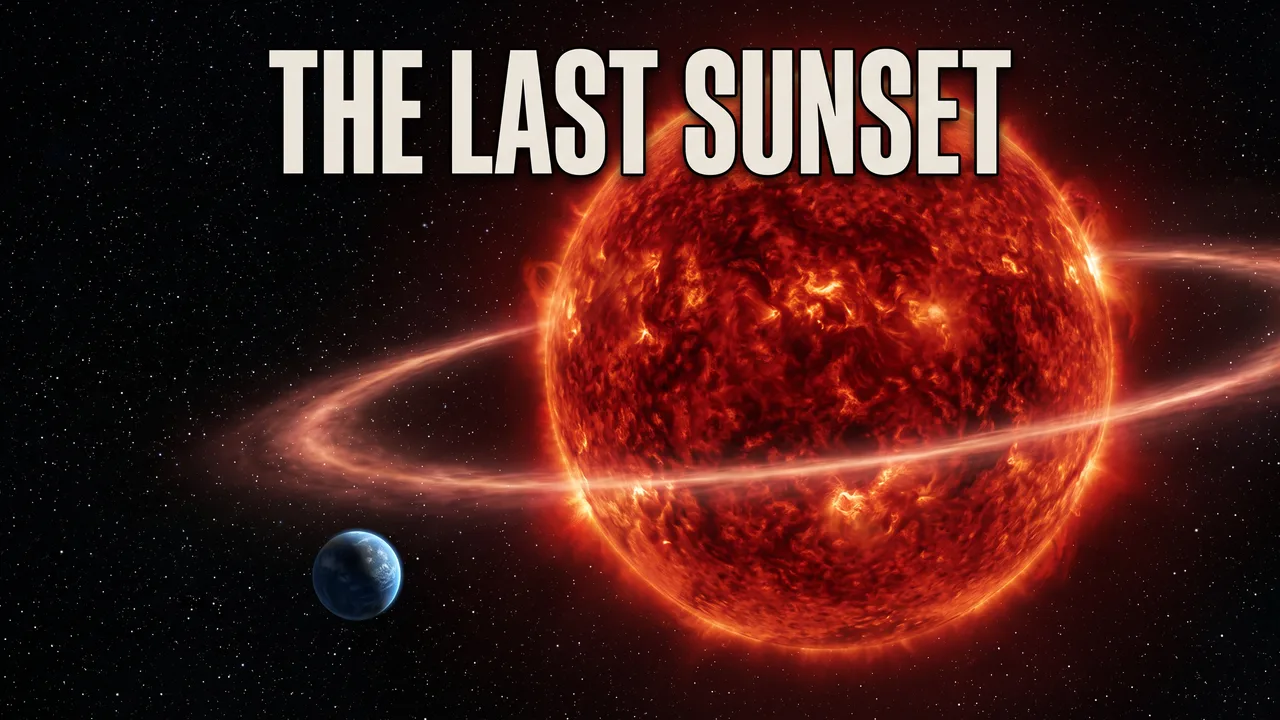
- The brief: Describe "A tiny blue planet in the lower left foreground dwarfed by a vast swollen red giant star filling the right side of the frame, a thin ring of glowing gas around the star, deep black space, sharp cinematic light, no people anywhere". Text: THE LAST SUNSET. Lettering: Heavy condensed caps.
- The trap: a galaxy wallpaper with words on it. Pretty, and indistinguishable from a thousand others at feed size.
3. Mysteries, unsolved cases and true stories
Narrated cases, disappearances, odd places and historical mysteries. The thumbnail is one detail lit in the dark, the thing the story turns on, with a lot of shadow around it.
- The thumbnail: an old door half open at the end of a dark hallway, a thin blue light through the gap and one red ribbon on the handle, with an instruction the viewer wants to disobey: "DON'T OPEN IT".
- The trap: real victims' photos or crime-scene images. Beyond taste, a real person's face is a line ThumbnailMaker refuses to cross: it turns down prompts that identify a real person.
4. Narrated Reddit and forum stories
A voice reads a story from a forum over gameplay or a slow background. It is the most copied faceless format, and the one closest to YouTube's "scrolling text" example. It survives only with original narration, editing and commentary. The thumbnail is a scene from the story, drawn or generated, never a screenshot of the post.
- The thumbnail: the moment the story turns, as a scene: an empty wedding chair, a phone lighting up at 3 AM. Two words, like "SHE LIED".
- The trap: the same background clip under every story. That is the template YouTube's policy describes.
Which faceless niches sell knowledge or money?
5. Personal finance
Budgeting, saving, investing basics, explained with charts and objects. The thumbnail uses one object that stands for the money, never a pile of cash with a promise attached.

- The brief: Describe "A glass jar of coins on a dark wooden desk with a small green seedling growing out of the coins at the top, a calculator and an open notebook softly out of focus behind it, warm window light from the left, no people and no hands anywhere". Text: $1 A DAY. Lettering: Heavy condensed caps.
- The trap: income claims. "$10K A MONTH" on a thumbnail invites exactly the viewer who leaves when the video doesn't deliver it.
6. Product comparisons
"Cheap vs expensive", "$5 vs $500", budget against premium: the comparison is the video and the thumbnail. Split the frame, light each half differently and put the two prices on it.
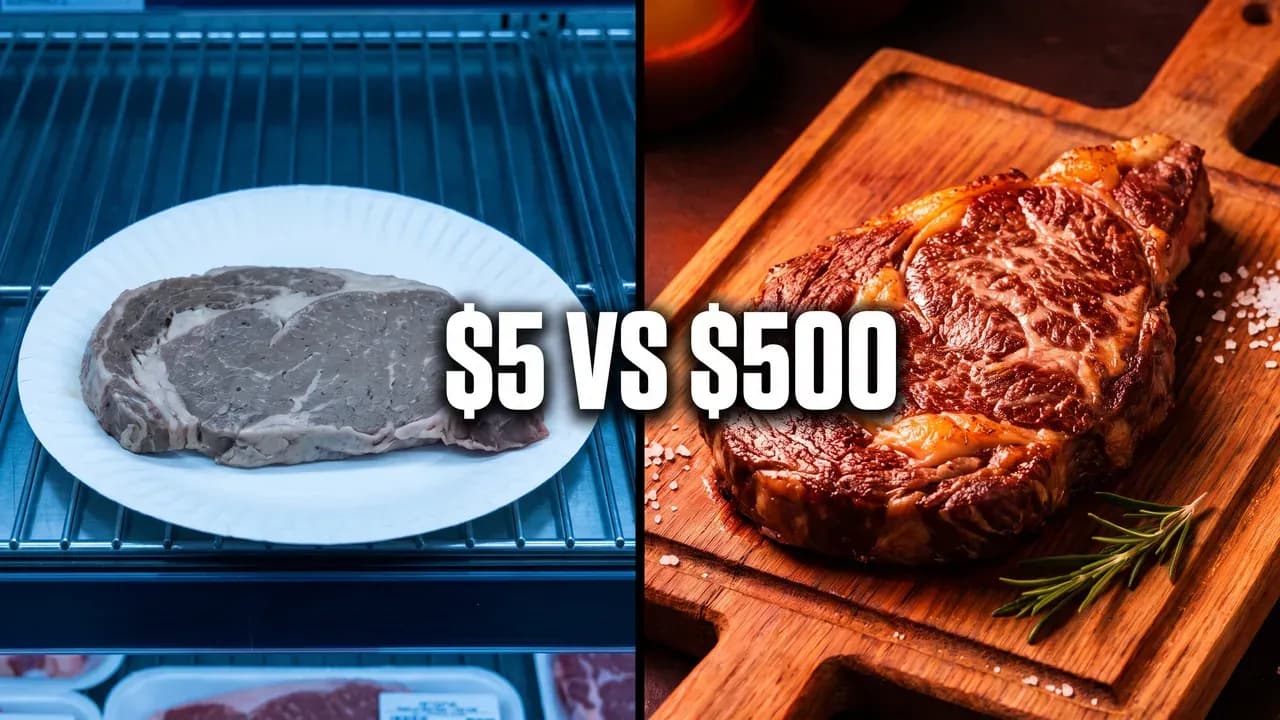
- The brief: Describe "Split frame: on the left, a cheap grey supermarket steak on a paper plate under cold blue light; on the right, a thick perfectly seared steak on a wooden board under warm orange light; a sharp vertical dividing line in the middle". Text: $5 VS $500. Lettering: Heavy condensed caps. Style: Versus.
- The trap: two halves that look alike when shrunk. Check the thumbnail at 168 pixels wide before you publish.
7. Tech explainers and gadget comparisons
How a thing works, which one to buy, what changed this year. Hands can appear; a face never has to. The product is the subject, large, against a plain dark background.
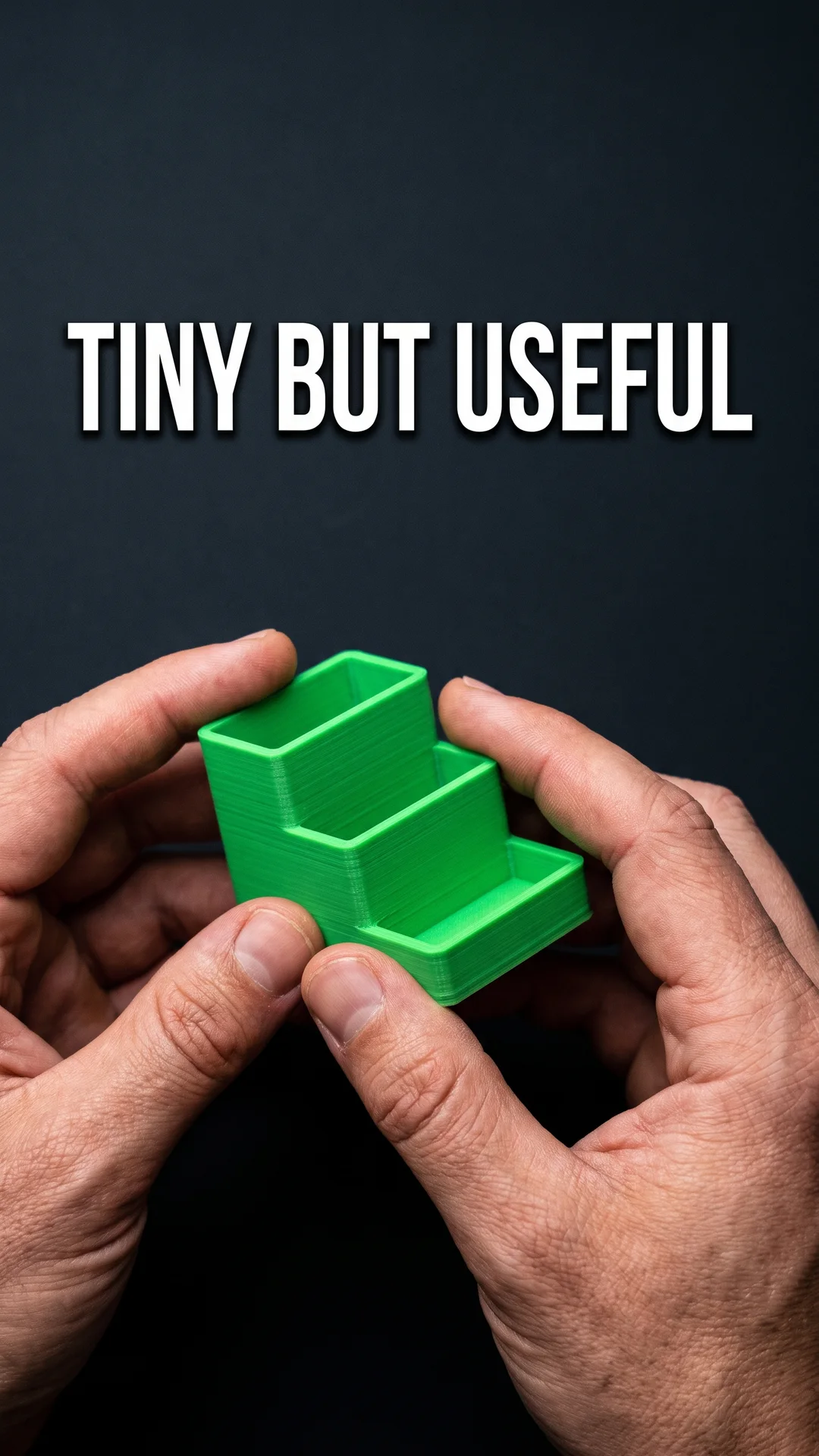
- The brief: Describe "Two hands hold up a small bright green 3D-printed desk gadget against a dark matte background, sharp product lighting, close shot, nothing else in frame". Text: TINY BUT USEFUL. Lettering: Bold sans-serif. Format: Shorts 9:16.
- The trap: a real brand's logo as the focal point. It is someone else's trademark, and it makes your thumbnail look like their ad.
8. Top-ten and ranking videos
"10 most dangerous roads", "7 animals that shouldn't exist". The list is the format, so the thumbnail shows the number one item, large, with the number. Don't show all ten: a collage of ten tiny pictures is the most common thumbnail mistake.
- The thumbnail: the winner of the list, alone, with "#1" or the count in the words: "10 WORST ROADS".
- The trap: clickbait about an item that sits at number seven. The viewer who came for it leaves early, and YouTube reads the early exits.
Which faceless niches are visual first?
9. Faceless gaming
Gameplay with a voice-over: tutorials, challenges, lore, speedruns. The game is the subject, so the thumbnail is the in-game moment, an original character or a scene, not a face-cam. The page on thumbnails for gaming channels covers each game's style.
- The thumbnail: the moment of the challenge, from inside the game: a lava floor, the last zone, a giant build next to something tiny.
- The trap: official game art or a famous character as the subject. Use a moment from your own run instead.
10. Geography and maps
Why borders look the way they do, the places nobody lives, the countries that almost existed. The map is the subject, with one region highlighted and the rest muted.
- The thumbnail: one country or region in orange on a grey map, a question in the words: "WHY IS THIS EMPTY?"
- The trap: a full, detailed map. At feed size it is a beige rectangle.
11. Animal and nature facts
Strange animals, survival in extreme places, how a plant traps an insect. The animal at its most surprising is the thumbnail, close and sharp, with its environment visible behind.
- The thumbnail: one animal doing the odd thing the video is about, two words: "IT CAN'T DIE".
- The trap: the cute version of the animal when the video is about the strange one.
12. Ambient sound, study and sleep videos
Rain on a window, a café at night, a fireplace for eight hours. The thumbnail is a calm scene, often with no text at all, and the title does the explaining. Music has to be your own or licensed: YouTube's reused-content rules name "collections of songs from different artists (even if you have their permission)".
- The thumbnail: a cozy scene with one warm light source and nothing moving: a desk lamp, rain on glass, a sleeping cat.
- The trap: a busy scene. A relaxing video needs a thumbnail that is quiet at feed size too.
How do you make a thumbnail with no face?
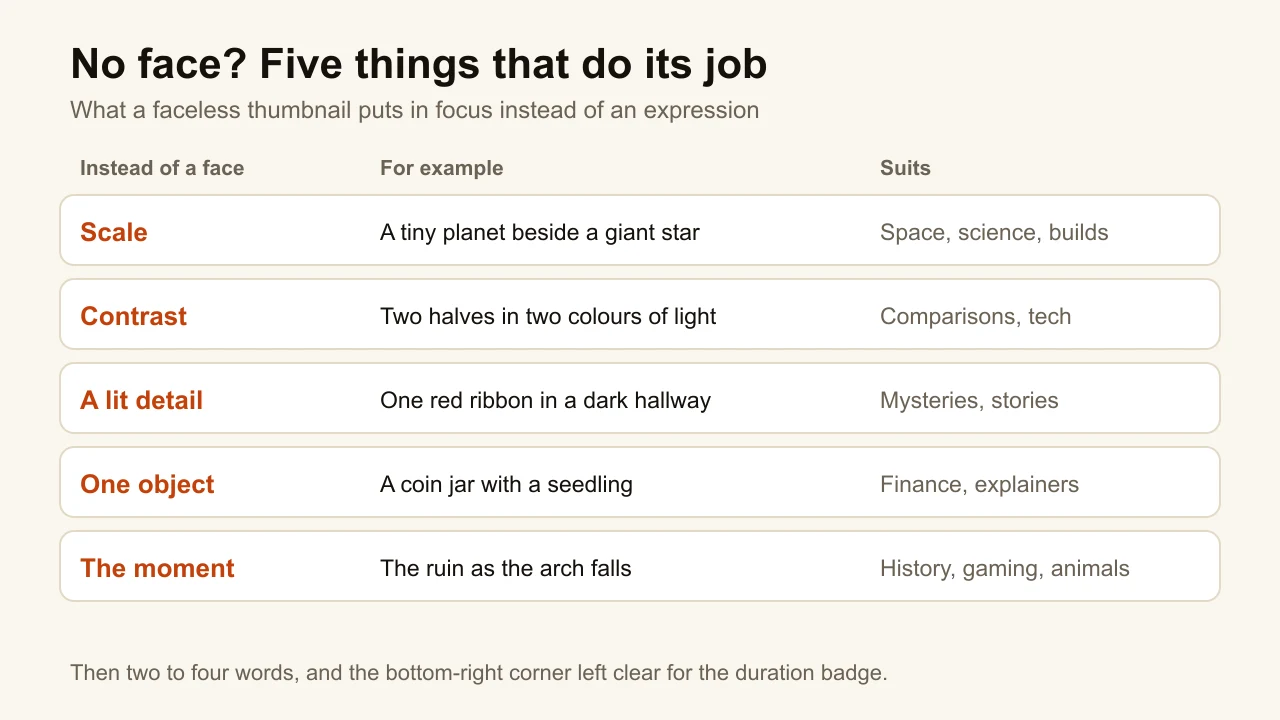
Every idea above uses the same five rules:
- One subject. The ruin, the planet, the jar. If you need to explain what to look at, there are too many things.
- Make it do the face's job. Scale (a small thing next to a big one), contrast (two halves in two lights), a lit detail in the dark, or one object that stands for an idea.
- Two to four words. A question, a count or a verdict, never the title repeated.
- Leave the bottom-right corner empty. YouTube's duration badge sits there on every video.
- Check it small. The free YouTube thumbnail tester shows it in the home feed, on a phone and at 168 pixels, with no account.
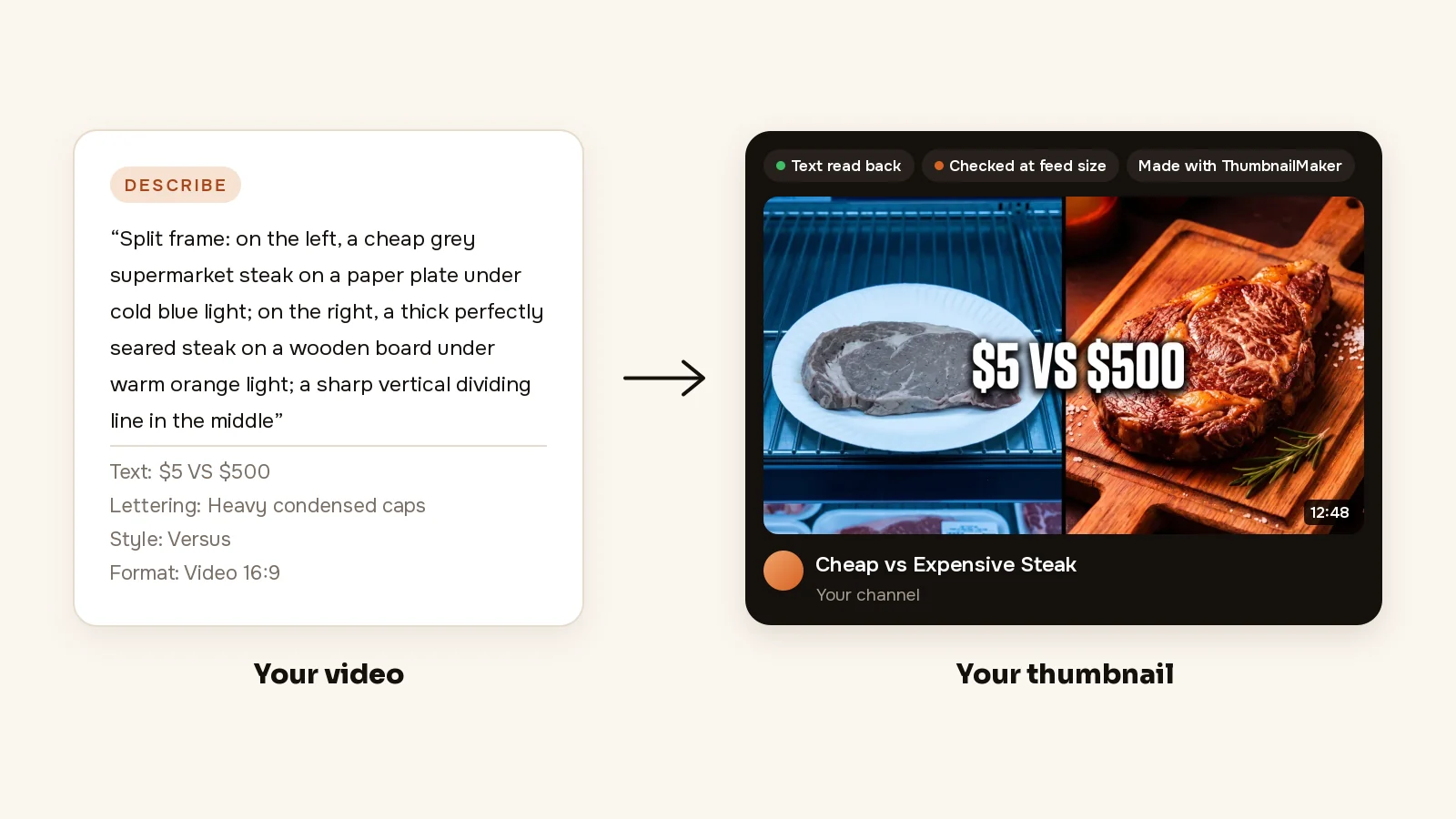
To make these from your own video, paste its link into ThumbnailMaker and it writes the brief: the scene, the words and the style. Change any word of it, or write "no people" into the scene. The words are read back and redrawn if a letter is wrong. For a channel that publishes daily, its API and Batch do the same for many videos at once; the best YouTube automation tools compare it with the rest of a faceless channel's stack, from research to upload.
How to choose a faceless niche
Can you make 50 videos without repeating one?
Write down fifty titles before you make the first video. History, space and mysteries pass easily. A niche that runs dry at fifteen will push you toward templated videos, which is what YouTube's policy refuses to monetize. The free YouTube title generator helps fill the list.
Can the subject fill a frame?
If the thumbnail you imagine is a stock photo of a person at a laptop, the niche has no subject. Pick one where an object, a place or a moment can carry the frame.
Will you write the scripts, or only assemble them?
The scripts and the narration are what make a faceless video original. A niche you know something about is worth more than a niche with a higher ad rate that you can only summarise.
Pick the niche, then the first thumbnail
Choose the idea where you can list fifty titles today, make the first video, and judge the thumbnail at feed size before anything else. When the video is ready, make its thumbnail from the link with the 3 free thumbnails, then see what a plan costs if the channel keeps going.
ThumbnailMaker Team: Guides from the people building ThumbnailMaker: thumbnail design, CTR, and what happens under the hood of an AI generator. Every number is checked against YouTube's own pages and dated.